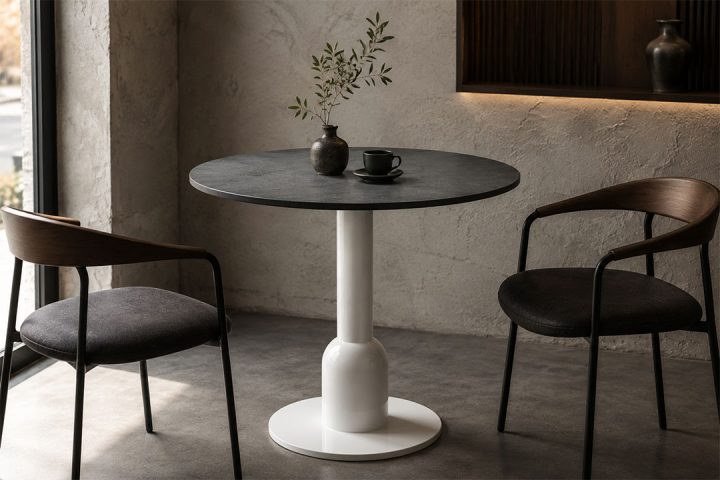


What Buyers Should Check Before Ordering Commercial Restaurant Furniture
Ordering commercial restaurant furniture is not just about choosing products that look attractive. For restaurant owners, hospitality buyers, furniture distributors, and project contractors, furniture purchasing is a business decision that affects customer experience, maintenance, project quality, and long-term performance. Before placing an order, buyers should review several key factors to make sure the furniture is suitable for commercial use.
1. Define the Type of Project
The first step is to clarify the project type. Restaurant furniture for a fast-casual chain is different from furniture for a boutique café, hotel dining area, or hospitality lounge. Each environment has different expectations for durability, appearance, layout, and maintenance.Buyers should define:
Restaurant, café, hotel, or commercial project
Indoor or outdoor use
Standard order or custom project
Number of seats and layout requirements
A clear project definition makes product selection more efficient.
2. Review Product Matching
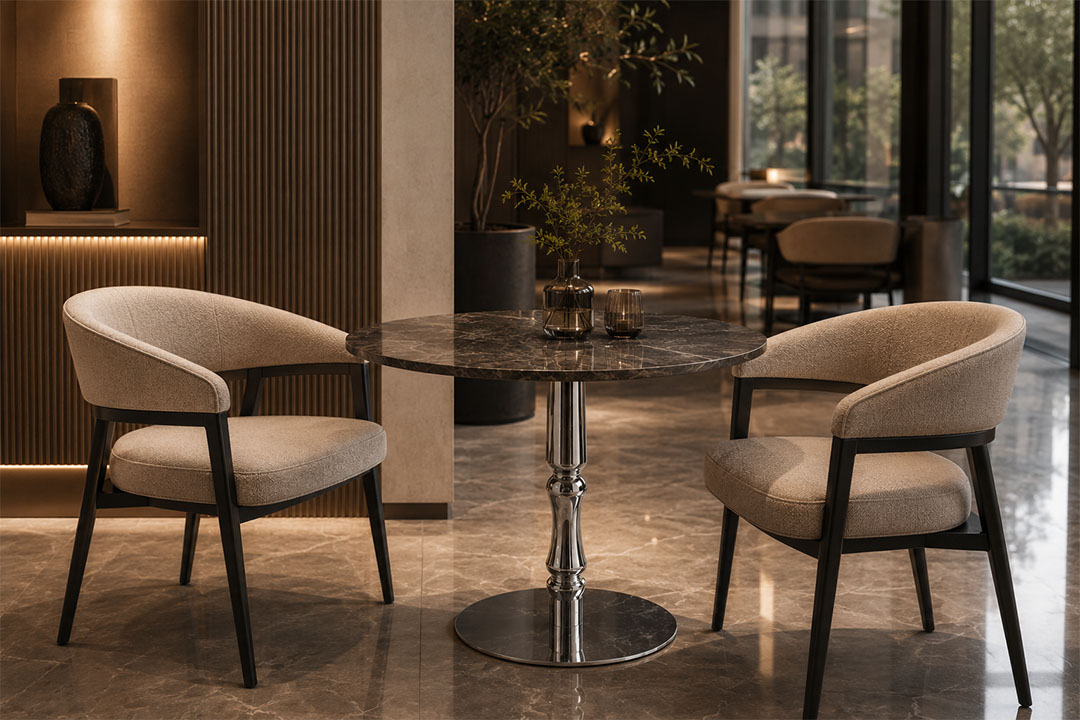
Commercial restaurant furniture usually includes more than one product. Table bases, table tops, restaurant tables, and matching furniture should be considered together, not separately. The dimensions, materials, and finishes of each part should work as one coordinated furniture solution.
For example, a heavy stone table top needs a stable base. A hotel dining table may need to match other furniture in the space. Buyers should always check whether the products are designed to work together.
3. Check Materials and Finishes
Materials and finishes affect both durability and appearance. In busy restaurant and hospitality environments, furniture must handle frequent cleaning, food service use, and daily wear. Buyers should understand what materials are used in the table base, table top, and other furniture components, and whether the finish is suitable for commercial use.Key questions include:
What material is used for the table base?
What table top material is recommended?
What finish options are available?
Is the surface easy to clean and maintain?
4. Evaluate Customization Options
Not every project can use standard furniture sizes. Buyers should check whether the supplier can support custom dimensions, finishes, materials, or structural adjustments. This is especially important for branded restaurants, hotel dining projects, or spaces with unusual layouts.
5. Ask About Production and Delivery
Reliable supply capability is as important as product quality. Buyers should understand the supplier’s production capacity, project support experience, and delivery process. For commercial furniture projects, delays can affect restaurant openings, installation schedules, and project timelines.
6. Consider Export and Project Experience
For overseas buyers, it is useful to work with a supplier that understands export requirements and project coordination. Experience in hospitality and commercial furniture projects often means better communication, more practical product matching, and smoother support for international orders.
Conclusion
Before ordering commercial restaurant furniture, buyers should look beyond appearance and price. The right supplier should be able to support product matching, customization, manufacturing quality, and delivery coordination. By checking project needs, materials, finishes, customization options, and supply capability in advance, buyers can make better furniture decisions for restaurants, cafés, hotels, and commercial spaces.